
Van life became an internet fixation during the 2010s and continued trending well into the pandemic, but influencers dominated the discussion online. minizine wanted to know: What’s van life really like? We spoke to Hannah, an American living in Ireland, to learn more about her experiences, both in the continental United States and Western Europe.
I think it was mainly YouTube. I found this channel called Eamon & Bec and they were two people that lived in a van from Canada. They actually brought their van from Canada, sent it over to England, and they took a ferry over to Ireland. I’ve always kind of been interested in traveling and camping, hiking—all that kind of stuff. And then I started seeing these things for van life, so I turned to Cillian [my fiance], and I had known him for a little less than a year at that point, and I was like ‘We should totally buy a van and turn it into a camper, and travel across Europe.’
We’re usually watching videos on how to do these things or we'll go up and just start talking to people. We were in Georgia, outside of Tbilisi Sea, over the summer. We saw the coolest rig—it was this older couple from Austria. They bought a military vehicle and drove it from Austria all the way to Mongolia. They were on their way to Turkey. It was just so cool. We just go up and we ask people like, ‘Oh, how did you install that? How did you do it?’
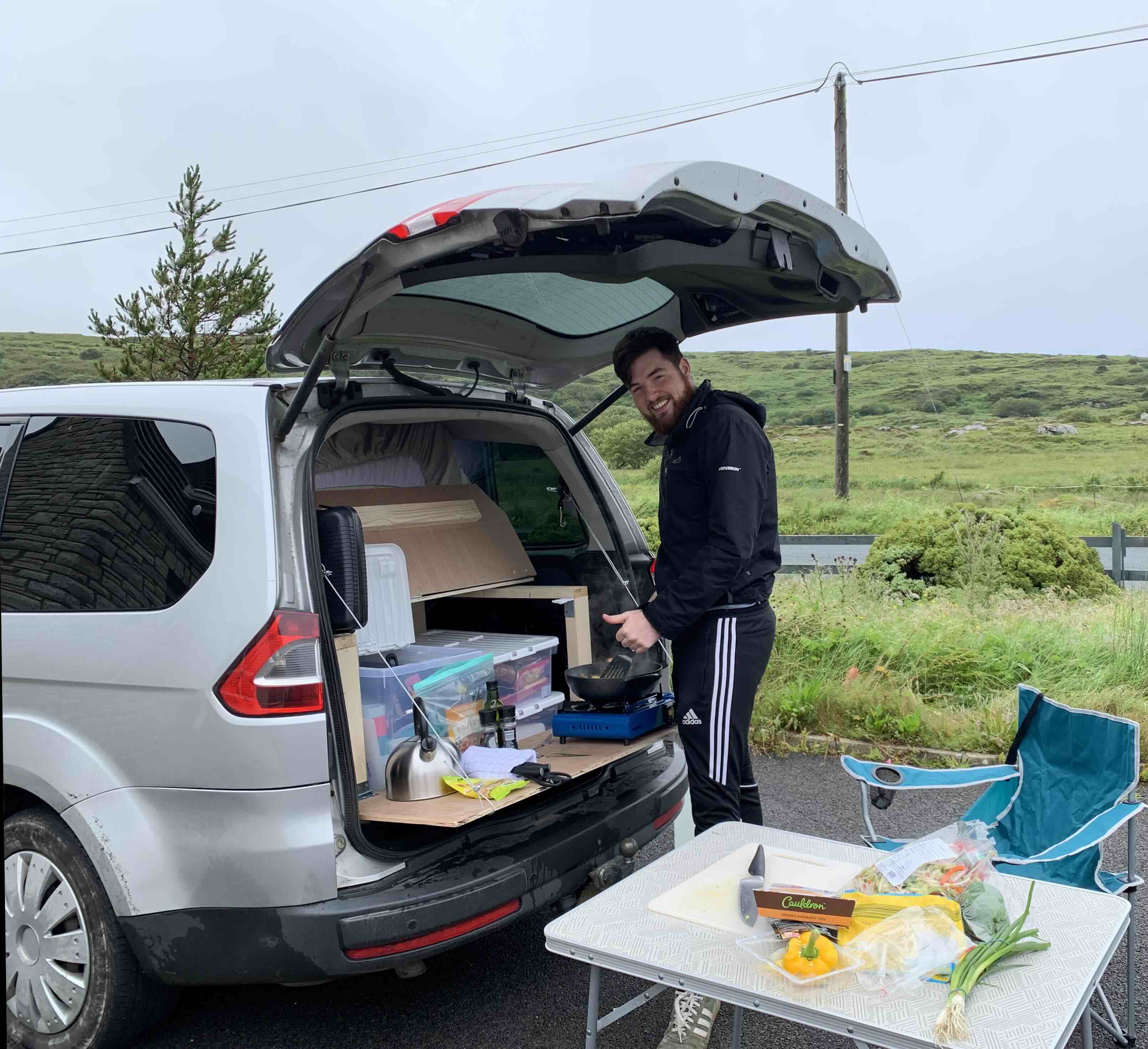
Larry, the Irish 2007 Ford Galaxy.
(minizine’s note: The Ford Galaxy was a minivan sold in European markets, similar to vehicles like the Toyota Sienna in the United States.) Larry was €1,250. And I would say we probably put maybe €250 into building that out. Unfortunately we weren’t 25 at the time, so we couldn’t get insurance in an actual van because there are certain rules for [Irish] camper van insurance, kind of similar in the States. So we said we’ll just settle on doing a regular passenger vehicle. We took the seats out of the back and we built a platform. It was very, very basic, [we were] working with some very light plumbing, a little water jug and we had a one burner stove. It was a great test, because it didn’t cost us too much to buy the van and we got to have two months traveling across Europe with it. We'll say it’s around €15,500 for two people to travel across Europe for two months [normally, without a van]. So, you know, €750 a person [with the van]. That’s pretty, pretty good.
The Ford Galaxy was kind of small and more like a Honda Odyssey minivan, so driving was okay. But we were driving with a right-hand [steering wheel] on the [right] side of the road. Since we brought that vehicle over to mainland Europe [from Ireland], they drive the same side of the road as the Americans. So instead of driving on the left, you’re driving [away from] the center of the road, if that makes sense. That was definitely challenging, but you get the hang of it after a while and you learn to adjust. But I will say I’m kind of a passenger princess.
We had our timing belt and water pump replaced. They didn't install the water pump correctly. So as we were driving across Europe, the coolant was leaking into the cabin of the car. We were so confused as to why puddles of water were showing up on the floor. We're like, ‘Huh, I guess our water jug is leaking. I guess our water bottle spilled.’ Then our engine kept overheating and we kept putting [more] coolant into the engine and nothing was working. Eventually we broke down in Scotland, where the engine had warped on the top and the bottom from heat exposure because nothing was cooling the engine.
The insurance provider that we had, it was kind of like AAA [in America]. It was called AA. If you broke down anywhere within Ireland or the UK, they would tow you back to your home for free. But the company just didn't know what to do. [Eventually] they gave us a relay point. We're in the middle of nowhere in Scotland—Loch Ness—with no car at this point because it's stuck in the shop. And [AA said], don't worry: at some point, a tow truck will pick you and the car up, and we will bring you to another relay point. So we're like sitting on the side of the road, waiting for this tow truck to pick us up. They bring us maybe like three or four hours south and they just dump us at this gas station in the middle of nowhere. Just this random gas station. They're like, ‘At some point someone will come to collect you to bring you the next part of the way.’ We sit there for four or five hours and then another tow truck comes and then they just drop the van off at some random depot. I don't even know where it [went]. They arranged a taxi for us, and then we were able to get back to Dublin. Three or four days later, another tow truck showed up and knocked on the door. They just dumped it outside the front of the house. The van, at this point, was worth nothing. We ended up getting a hundred euro voucher to go to the scrap yard.
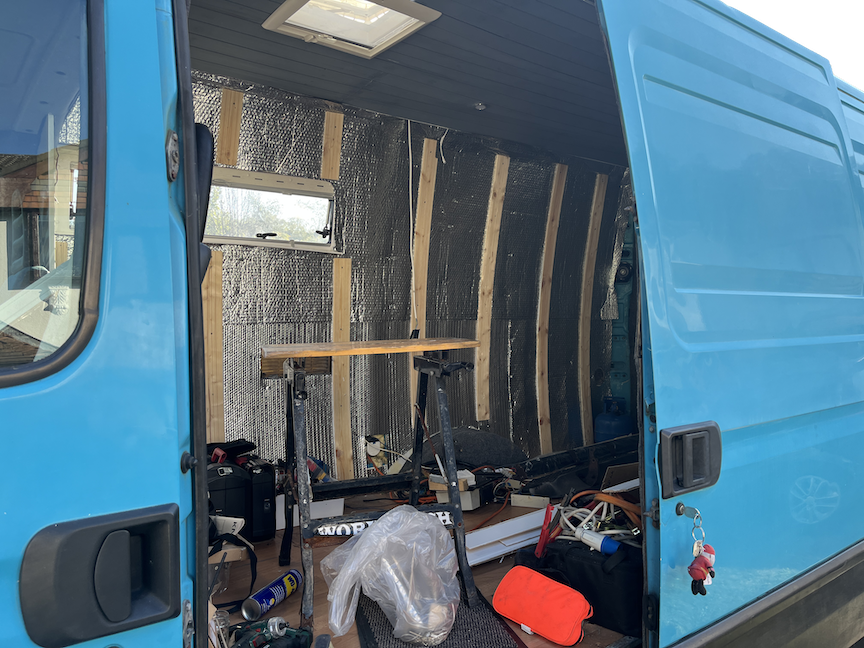
Bertha, the Iveco Daily.
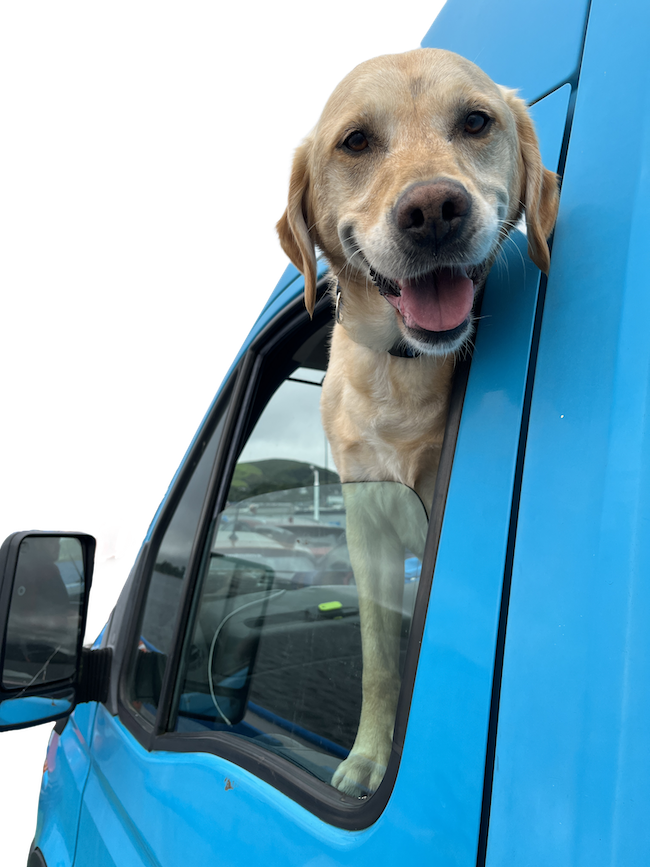 We wanted to make sure that we could
fit an airline approved [pet]
travel
crate. That was our number one priority. Because if something happened to the van, we wanted a backup
option, where we could fly [our dog] Thor back to Ireland, so we weren't stuck in the middle of Italy
with
no way to get him back. Cause it's like a 27 hour ferry to get from Spain back to Ireland, or it's 24
hours
from France to Ireland, plus another like 15 hours if you're driving from the Irish port.
We wanted to make sure that we could
fit an airline approved [pet]
travel
crate. That was our number one priority. Because if something happened to the van, we wanted a backup
option, where we could fly [our dog] Thor back to Ireland, so we weren't stuck in the middle of Italy
with
no way to get him back. Cause it's like a 27 hour ferry to get from Spain back to Ireland, or it's 24
hours
from France to Ireland, plus another like 15 hours if you're driving from the Irish port.
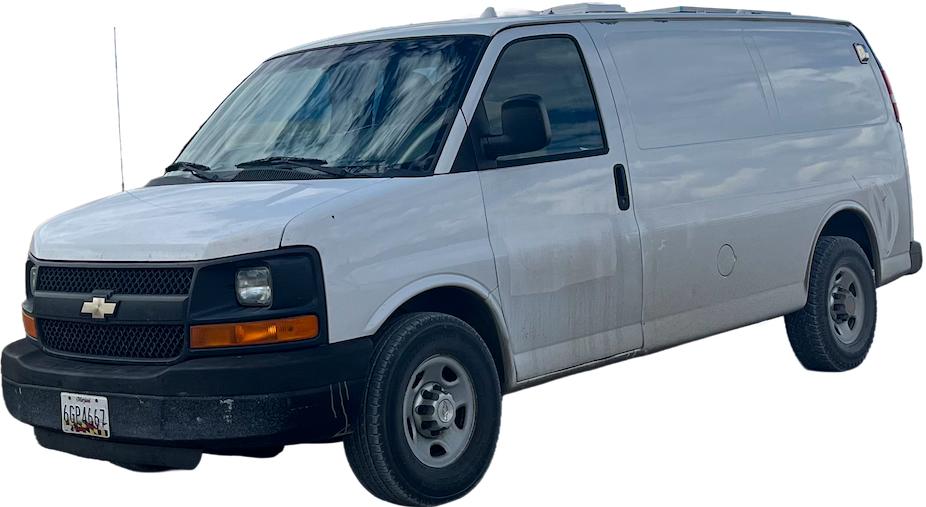
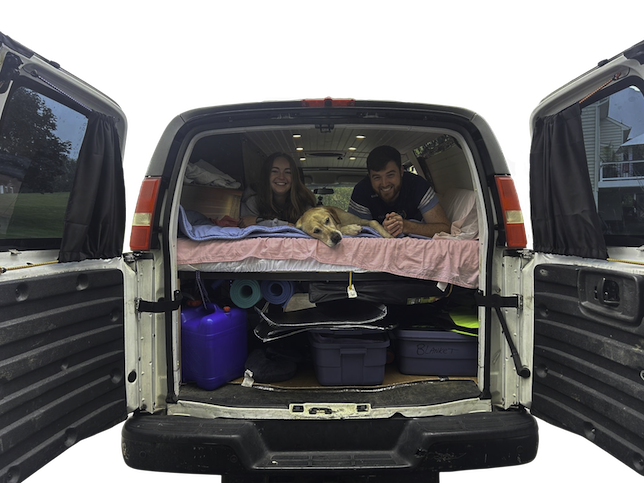
Chase, the van from Maryland.
We bought it for $6,500. We put around $3,000 in, between our solar panel, our battery, our fridge, our kitchen unit, building materials, insulation, and heater. And then we've done some maintenance work, new fuel pumps, so all in, that's around close to $16,000. That one's pretty pretty pricey. We're hoping to sell that on at some point. I was able to get a part-time remote job to work in Ireland while I was in the States that enabled us to keep traveling. I would work Monday and Tuesday, and I was contracted to start working at 12 p.m. Irish time until 9 p.m., Irish time. As we started going further west, the time zone changed. That resulted in me starting work at 5:00 in the morning and then finishing by like noon or 1 p.m., which worked out really well because I’d get all my work done in the morning. We worked in some pretty cool places, just looking at beautiful views while typing away or whatever.
 We started off in Maryland and went up to Niagara
Falls. Then we started making our way out to
Yellowstone National Park, which was absolutely beautiful. From there, we
went up to Montana and we
loved Bozeman, that's where we had to get our engine replaced. We ended up
spending some time around
Calgary and Banff National Park, which is just
gorgeous. And then eventually we headed over towards the
West Coast, so Vancouver, Washington, the coast of
Oregon. We drove down to
LA to see my cousin who's
performing in an opera, then went out to Death Valley. In November, we
drove through Arizona. We hiked
to the bottom of the Grand Canyon and out in one day, so we were really,
really proud of ourselves, but
exhausted. Then we went through all of the big five Utah National Parks,
then Colorado, we were there
for a month skiing. We headed back at the end of December, so we came back [to Maryland by] Christmas.
We started off in Maryland and went up to Niagara
Falls. Then we started making our way out to
Yellowstone National Park, which was absolutely beautiful. From there, we
went up to Montana and we
loved Bozeman, that's where we had to get our engine replaced. We ended up
spending some time around
Calgary and Banff National Park, which is just
gorgeous. And then eventually we headed over towards the
West Coast, so Vancouver, Washington, the coast of
Oregon. We drove down to
LA to see my cousin who's
performing in an opera, then went out to Death Valley. In November, we
drove through Arizona. We hiked
to the bottom of the Grand Canyon and out in one day, so we were really,
really proud of ourselves, but
exhausted. Then we went through all of the big five Utah National Parks,
then Colorado, we were there
for a month skiing. We headed back at the end of December, so we came back [to Maryland by] Christmas.
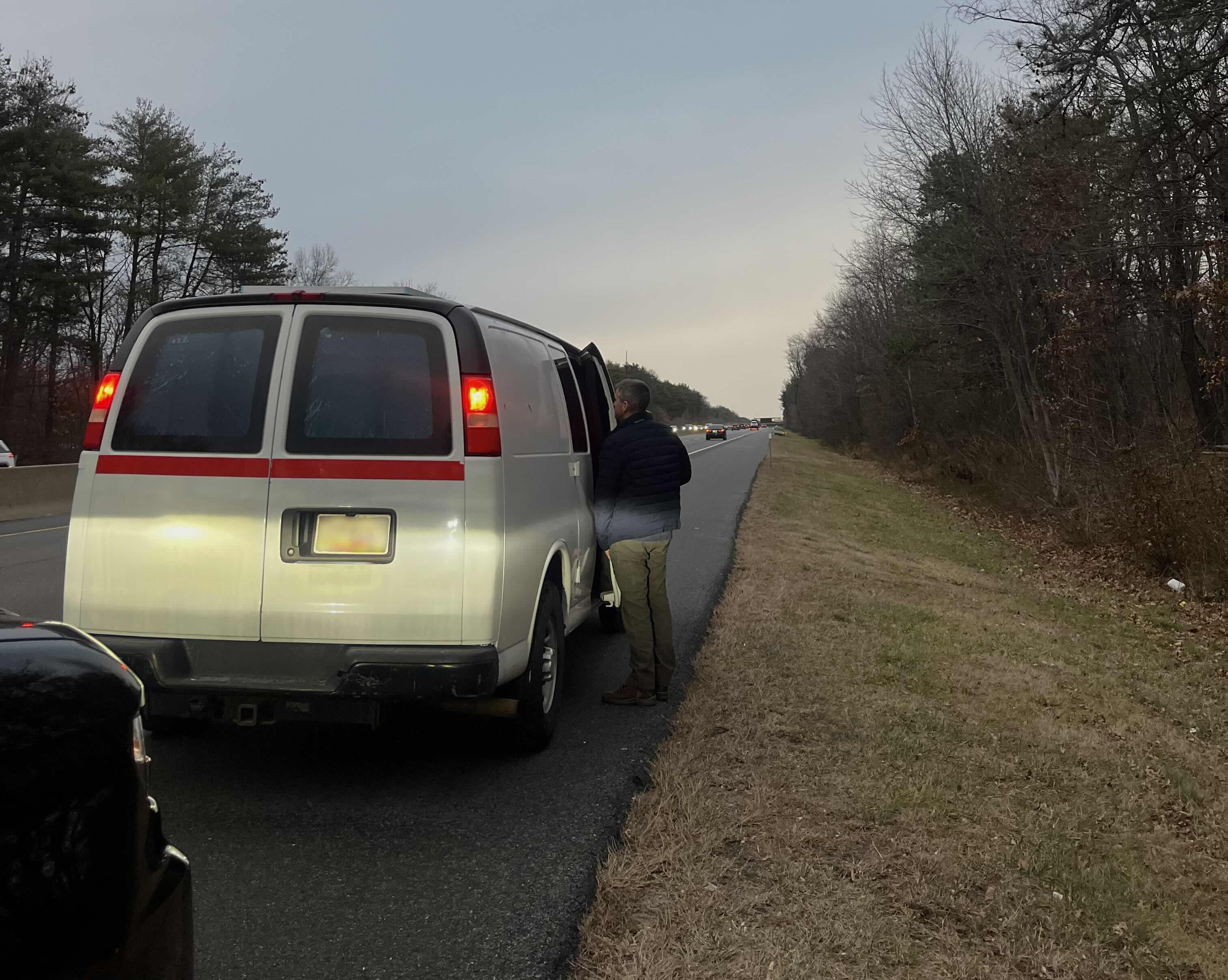 [In Bozeman] we developed a random knock
in the engine. We brought it to a couple of different mechanics
and they said it was the crankshaft. I didn’t even know what a crankshaft was. It was going haywire and
at any moment in time, it would just bust through the engine and destroy it. So we started driving back
[home]. When we found out the van was done [for], I was just so sad. I was like, ‘No, this would be our
third strike. I'm not going to let this happen.’ So the next morning, I picked up the phone and called
as many mechanics as I possibly could on our way back towards Maryland. We were just crossing through
Rapid City, South Dakota, and I think I probably talked to, I would say about seven different mechanics,
and I found a really nice guy. He was able to do it in around five days.
[In Bozeman] we developed a random knock
in the engine. We brought it to a couple of different mechanics
and they said it was the crankshaft. I didn’t even know what a crankshaft was. It was going haywire and
at any moment in time, it would just bust through the engine and destroy it. So we started driving back
[home]. When we found out the van was done [for], I was just so sad. I was like, ‘No, this would be our
third strike. I'm not going to let this happen.’ So the next morning, I picked up the phone and called
as many mechanics as I possibly could on our way back towards Maryland. We were just crossing through
Rapid City, South Dakota, and I think I probably talked to, I would say about seven different mechanics,
and I found a really nice guy. He was able to do it in around five days.
Right before Christmas
our fuel pump [failed], we were at our cousin's house in Long Island. The mechanic didn't [replace] it
correctly. I pulled out of the shop and it literally went like four storefronts up the road and my
driveshaft fell out, the piece that spins the back axle. I just hear this clanking metal scraping,
screeching noise. I parked the car, and then the van started rolling backwards. I put the emergency
brake on. I jump out, and this nice guy's like, ‘I think you lost your muffler.’ I look at it, and I'm
like, ‘That is not a muffler.’ The mechanics come up. Underneath the mechanic is trying to put the drive
shaft back together so they can bring it back to the shop to permanently fix it. Then the police roll up
and they're like, ‘Excuse me, ma’am, we got a report of a guy stuck underneath the van in the middle of
the town.’ I was like, ‘Oh my God, no, everybody's fine. I just lost my driveshaft.’ Anyway, we got that
fixed. We get back down to Maryland, have a great time at Christmas. We start driving back up to New
York with my dog and my family's dog, and just lose all acceleration. We pull over, put on the hazards,
and the van just shuts off and we can't get it started again. So I called another tow truck. It turns
out that the people who installed the fuel pump last week didn't do a full job, so the electrical wiring
was wrong.
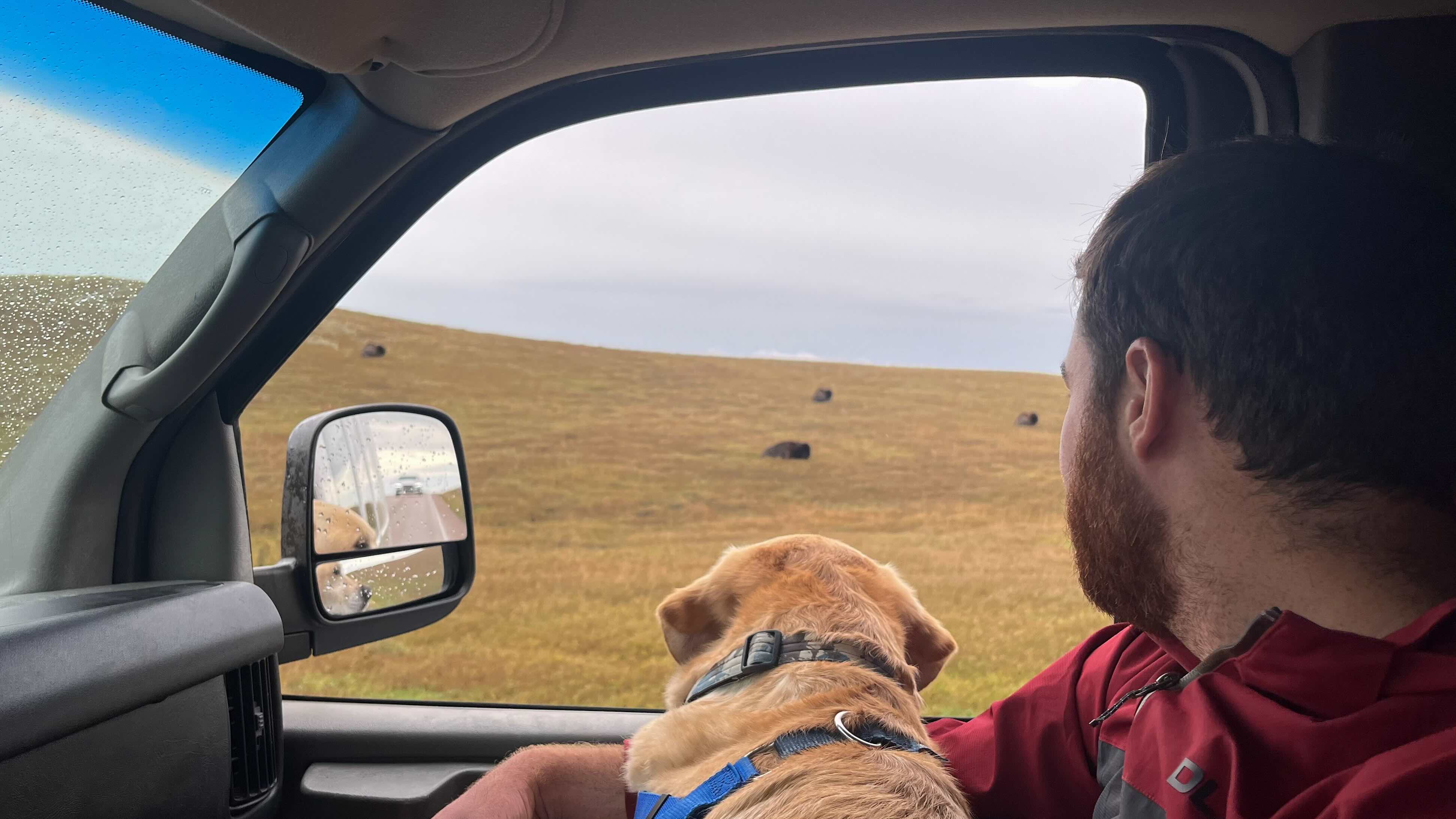
Thor and Cillian in the Chevy Express.
A lot of it depends on how you like to travel. Are you okay showering with shoes on? If you like luxury and soft towels, then maybe it might not be the best choice. [Van life involves] making things work and having a little bit of an adventure. You go to campsites and either pay to take showers, dump your sink water or toilet waste. Some people really don't want to think about that.
It’s one thing to see the finished product on Instagram or YouTube, and be like ‘Oh wow, that’s so aesthetic.’” But there’s a lot of engineering, from figuring out your electrical system and what [features] you want to include to doing all your plumbing, building your carpentry. There’s also the whole physics of how the van moves making sure that all your stuff is secure. But you have so much creative freedom.